IPL Skin Rejuvenation: What It Treats, How It Works and What to Expect
Updated August 2026
For many of us in New Zealand, years of sun exposure eventually begin to show on our skin. Freckles become more noticeable, areas of pigmentation appear, redness lingers and the complexion can start to look less even than it once did.
IPL, or Intense Pulsed Light, is one treatment we use at Ponsonby Cosmetic Medical Clinic to address some of these visible changes. You can also explore our IPL skin treatment service.
But what exactly is IPL? How is it different from a laser? What can it realistically help with - and how do you know whether it is the right treatment for your skin?
Here is what you need to know.
What is IPL?
IPL stands for Intense Pulsed Light.
Despite often being grouped together with laser treatments, IPL is not technically a laser. A laser emits a specific wavelength of light, while IPL uses a broader spectrum of filtered light. Different settings can be selected depending on the skin concern being treated.
That light energy is absorbed by particular targets within the skin, such as melanin in areas of pigmentation or haemoglobin within visible blood vessels. The absorbed energy is converted into heat, allowing selected areas to be treated while surrounding tissue is protected.
IPL is non-ablative, meaning it does not remove the surface of the skin.
DermNet NZ describes IPL as a non-invasive, non-ablative light treatment used for a range of pigmented and vascular skin concerns.
What can IPL help treat?
At PCMC, IPL may be considered for concerns including:
- Sun spots and some forms of superficial pigmentation
- Freckles
- Uneven-looking skin tone
- Facial redness
- Visible small blood vessels and capillaries
- Visible signs of accumulated sun exposure
- Overall skin clarity and rejuvenation
One of IPL’s advantages is its ability to address both brown and red colour within the skin, depending on the settings selected and the individual’s suitability.
For pigmentation, the light is absorbed by melanin within the targeted area. For redness and visible vessels, it can be absorbed by haemoglobin within the blood vessels.
The important qualifier is that not all pigmentation and not all redness are the same.
A brown spot may be a freckle, sun-related lentigo, post-inflammatory pigmentation, melasma or something requiring medical assessment. Likewise, redness can have several different causes.
That is why we assess your skin before deciding whether IPL is an appropriate treatment.
Is IPL good for pigmentation?
It can be - particularly for certain types of superficial pigmentation and sun-related spots.
New Zealand’s high levels of ultraviolet radiation make pigmentation and visible signs of sun exposure common concerns in clinic, but the first step is understanding what type of pigmentation is present.
IPL is not automatically the right treatment for every brown mark.
For example, melasma behaves differently from straightforward sun spots and can relapse or worsen after some light and laser procedures. Post-inflammatory pigmentation can also sometimes be aggravated by physical treatments.
If you have a new, changing, irregular or otherwise concerning pigmented lesion, that needs appropriate medical assessment rather than simply being treated cosmetically.
This is one reason we believe treatment should begin with the skin concern - not with choosing a machine.
Can IPL help facial redness and visible capillaries?
IPL can also be used for selected vascular concerns.
The light can target haemoglobin within superficial blood vessels, making IPL useful in appropriate patients for visible capillaries and certain forms of facial redness. DermNet NZ includes IPL among treatment options for a number of superficial vascular skin concerns.
Again, persistent facial redness can have different causes, including rosacea, so identifying what is happening in the skin matters before treatment begins.
IPL vs laser: what’s the difference?
It is an understandable question because IPL and laser are often spoken about interchangeably.
They both use light energy, but they deliver it differently.
Laser treatments use a specific wavelength of light designed to target a particular structure or depth.
IPL uses a broader range of wavelengths, with filters and settings selected according to the treatment goal.
Neither is universally “better”.
The right technology depends on what we are trying to treat, your skin type, your history and your treatment goals.
In some cases IPL may be appropriate. In others, a different laser, skin treatment, skincare programme or combination approach may make more sense.
What happens during an IPL treatment?
Before treatment, your skin and concerns should be assessed to make sure IPL is suitable for you.
Treatment settings are then selected according to factors including the area being treated, the target concern and your skin type.
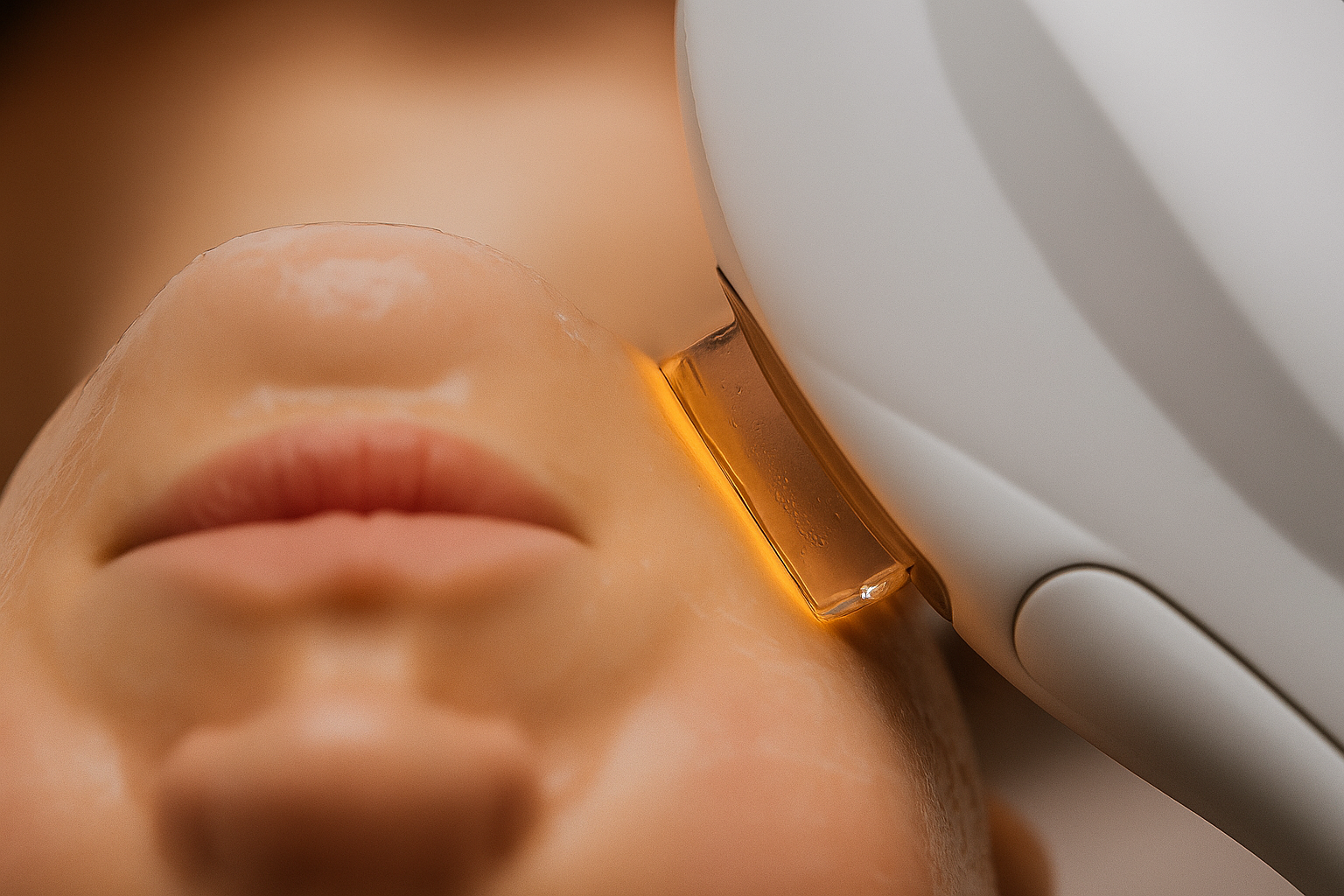
During treatment, a handpiece delivers short pulses of light to the skin. Eye protection is used during the procedure.
People describe the sensation differently, although the individual pulses can feel warm or sharp against the skin.
The length of an appointment varies according to the area being treated and your individual treatment plan.
What happens after IPL?
Immediately after treatment, some redness and mild swelling can occur.
When pigmentation has been targeted, pigmented areas may temporarily become more noticeable or darker before gradually fading. Your clinician will talk you through what is expected for your particular treatment and how to care for your skin afterwards.
Potential adverse effects of IPL can include redness, swelling, blistering, crusting and temporary changes in pigmentation. Scarring and infection are less common but are recognised risks.
Following the aftercare instructions you are given is important.
How much downtime is there after IPL?
IPL is generally considered a treatment with relatively limited downtime compared with more intensive resurfacing procedures, but that does not mean there is no recovery period.
Your skin may look red or feel warm following treatment, and targeted pigment can look darker for a period afterwards.
How your skin responds depends on what has been treated, the treatment settings and your individual skin.
If you have an important event coming up, let us know so we can factor this into your treatment timing.
Why is winter a popular time for IPL in New Zealand?
IPL can be performed at different times of year when appropriate, but the cooler months can be a particularly practical time to plan treatment.
Recent sun exposure and tanning can affect IPL suitability and increase the risk of unwanted pigment change. Sun exposure is also an important consideration during the treatment and recovery period.
In winter, many Aucklanders naturally have less incidental UV exposure than through the height of summer, which can make managing pre- and post-treatment sun care easier.
That doesn’t mean SPF takes winter off.
Good sun protection remains an essential part of looking after your skin before, during and after IPL treatment.
How many IPL treatments will I need?
There isn’t one number that applies to everyone.
Some people are looking to address a small number of visible spots. Others have more widespread pigmentation, redness or accumulated sun damage.
The number and spacing of treatments will depend on:
- What is being treated
- The extent of the concern
- Your skin type and response
- Your treatment goals
- Whether IPL forms part of a wider skin plan
Your PCMC practitioner can recommend a treatment plan after assessing your skin.
Is IPL suitable for every skin type?
No single treatment is suitable for everybody.
Because IPL interacts with pigment in the skin, skin tone, recent sun exposure and tanning are important considerations. Certain medications and medical circumstances may also affect whether treatment is appropriate. Pregnancy, oral retinoids, photosensitising medication and sun exposure are among recognised contraindications or considerations for IPL.
This does not mean you need to work out your suitability yourself.
A consultation and skin assessment are there to do exactly that.
At PCMC, we consider your skin, your history and what you actually want to improve before recommending a treatment approach.
What should I do before an IPL appointment?
Your individual pre-treatment instructions will be discussed with you, but one of the most important considerations is sun exposure.
Let the clinic know about:
- Recent tanning or significant sun exposure
- Medications or supplements you are taking
- Active skincare or prescription products
- Pregnancy
- Recent procedures or treatments
- Changes to the area you want treated
If anything has changed since you booked your appointment, tell your practitioner before treatment.
So, is IPL right for my skin?
Possibly - but the answer depends on what we are actually treating.
If your concern is sun spots, superficial pigmentation, redness, visible capillaries or uneven-looking skin tone, IPL may be one of the options worth considering.
The better question isn’t simply, “Should I have IPL?”
It is:
“What is causing the change I’m seeing in my skin, and what is the most appropriate way to treat it?”
That is where we start at PCMC.
Our team can assess your skin, talk through your goals and recommend whether IPL - or another approach - is the right next step for you.
August at PCMC - Winter IPL Offer
Book two IPL treatments and receive a complimentary HydraFacial Classic.
Winter can be a useful time to address visible pigmentation, redness and signs of sun exposure while UV exposure is generally easier to manage.
IPL treatments at PCMC are personalised to your skin and treatment goals, with suitability assessed before treatment.
Book your IPL consultation or treatment with the PCMC team.
Offer terms, treatment sequencing and suitability apply.
Frequently Asked Questions
What does IPL stand for?
IPL stands for Intense Pulsed Light. It is a non-ablative light-based treatment used for selected pigmentation, vascular and skin-rejuvenation concerns.
Is IPL the same as laser?
No. Lasers typically use a specific wavelength of light, while IPL delivers a broader spectrum of filtered light. Which technology is appropriate depends on the skin concern being treated.
Can IPL remove pigmentation?
IPL can improve the appearance of certain forms of superficial pigmentation, including some sun spots and freckles. Not all pigmentation is suitable for IPL, which is why assessment before treatment is important.
Does IPL help redness?
IPL may be suitable for some superficial redness and visible capillaries because selected wavelengths of light can target haemoglobin within blood vessels.
Is IPL painful?
People experience IPL differently. The pulses are commonly described as brief warm or sharp sensations. Your practitioner can explain what to expect for the area being treated.
Is there downtime after IPL?
There can be temporary redness, warmth or swelling. Pigmented spots may also appear darker before they fade. Recovery varies according to the individual and the treatment performed.
Can I have IPL in summer?
IPL treatment timing depends on your skin and sun exposure. Recent tanning and significant UV exposure are important considerations, and sun protection before and after treatment is essential. Cooler months can therefore be a convenient time for many people to undertake a treatment course.
How many IPL sessions do I need?
It depends on the concern, your skin and your treatment goals. PCMC will recommend an individual treatment plan rather than a standard number of sessions.